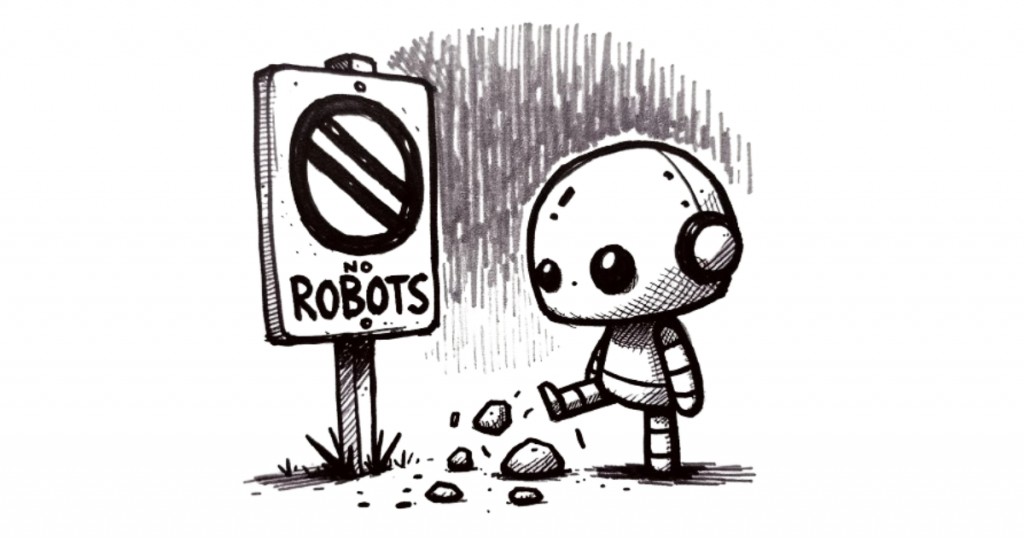
I’ve been in the SEO game for the better part of a decade. I’ve worked with both large corporations and SMEs, and I’ve witnessed firsthand some shady tactics when it comes to content creation. But it was not until I saw my work being replicated and falsely credited by plagiarists using so-called “Generative AI” that I truly understood the need for change.
The moment it hit home
What really got my back up was seeing my hard graft nicked, and then seeing these cheeky sods bragging about how clever they were on LinkedIn.
The process they were showcasing was simple:
- Give ChatGPT a URL.
- Ask it to rewrite the content for (x) audience in (y) brand voice.
- Ask it to make sure it couldn’t be found by a plagiarism checker.
- Publish.
- Profit from advertising.
- Repeat ad nauseam.
This is laundered plagiarism: it’s copy-and-paste with extra steps.
Oh yeah, it’s also blatantly a crime if you’re using copyrighted material to fuel your content machine.
It’s profoundly disrespectful, profiteering from someone else’s work, disincentivising the original author, and having the nouse to brag about it.
It’s nothing new; as someone who writes content with the expressed purpose of getting traffic from search engines, I know that every action has an equal and opposite competitor reaction. If I write a piece about the use of citric acid in bath bombs, every citric acid salesman from here to Timbuktu has a very familiar piece by the end of next week. The only thing that’s changed is the pace.
But neither ChatGPT, nor their army of morally bankrupt users, asked permission to use that material.
They walk right in, and take what they want.
So, I thought, it’s time to close the door.
The big challenge: preserving rankings
Creating this plugin without messing up the site’s SEO. I had to be clever about it: blocking only the dodgy bots, not the good ones that keep the web ticking over.
I’ve been testing this on my own sites for over a month, and it’s all looking good. No dip in Google rankings. So you can protect your work without shooting yourself in the foot, SEO-wise.
Who’s it for, then?
This thing isn’t just for the big players. It’s for anyone putting out quality stuff online: whether you’re running a small blog, publishing academic papers, or even if you’re a big corporate outfit. We’ve all got a stake in this.
I built the first iteration of Content Shield as a WordPress plugin, as over 43% of the internet is built on WordPress.
The features
- Bot blocking. Simply, it stops them from being able to read your content.
- Text locking. Ctrl-C is a problem; the text lock feature asks browsers to prevent users copying your text to their clipboard.
- Bot count. It lets you know how many unwanted bots we’ve stopped from nicking a peek at your content. Transparency is the name of the game.
- Install support. Not every writer is a whizz with tech, so I personally help set up and look after the plugin for our customers. No faff, just straight-up service.
- Copyright notice. A small snippet in your site footer, informing AI crawlers that the content is copyrighted and not up for grabs.
From my heart
I’m hoping this will keep the internet from turning into some sort of bland, repetitive echo chamber. We need fresh, original content, not the same old rehashed stuff getting increasingly less well-thought-out with each regurgitation.
Think of Content Shield like you would antivirus software or a home security system. It’s about a basic level of protection for what you’ve worked hard for. If we let copying get out of hand, we’ll end up with nothing new or exciting. Just a bunch of echoes from thieves.
So, there you have it. Content Shield is more than just a tool; it’s about standing up for the grafters, the thinkers, and the original content creators. It’s high time we had a bit of backup in this digital world, and that’s exactly what we’re here for.