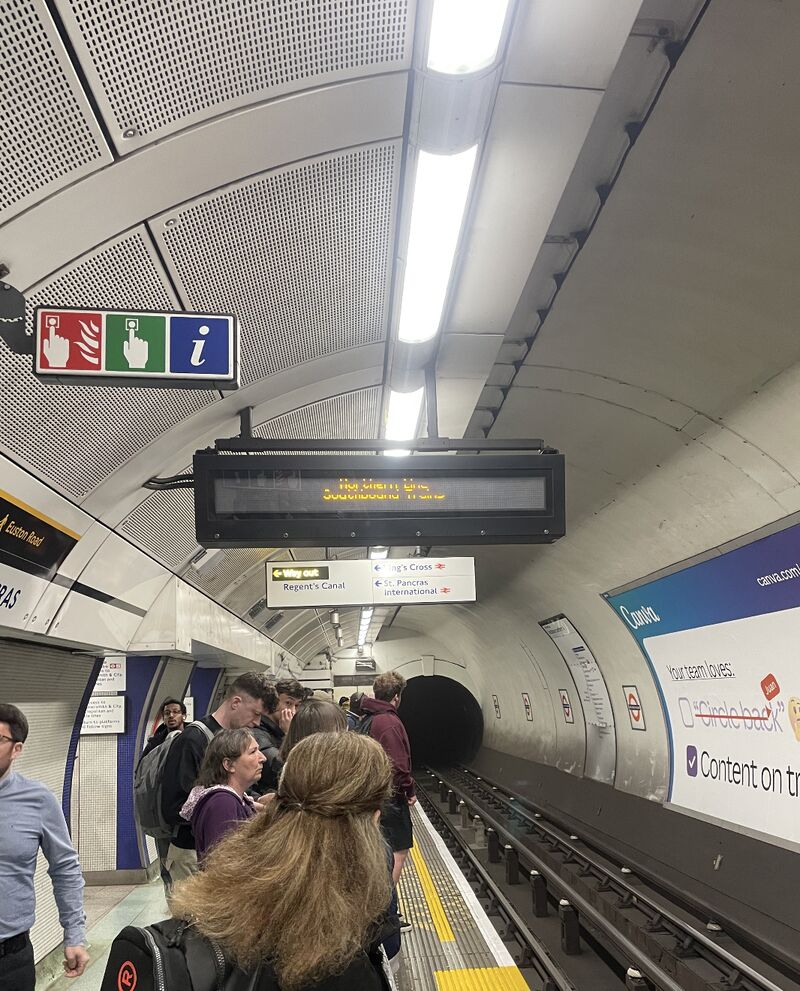
Something was wrong. I could feel it.
The moment I stepped onto the underground platform, I sensed it; something wasn’t right. Groups whispered among themselves. Solo commuters loomed anxiously over their phones, faces illuminated in blue light as they attempted to summon 5G, 500 steps below the surface, like trying to light a match in the rain.
The headphones came off. People peered over the yellow line. I looked up. No ETA. The overhead LED sign was blank.
Were we at the start of a major delay? Had we missed an announcement? Why did this feel more unsettling than usual? Clearly, trains had come (there were just enough people for rush hour), but doubt had crept in.
It reminded me of Rory Sutherland’s point about Uber: it isn’t just better because it’s faster or cheaper. It’s better because it gives you certainty. You can see your inbound ride. A certain wait, whether longer or shorter, is better than an indefinite one.
Knowing when something is going to happen makes waiting feel shorter. It reduces stress. It gives us control. A blank screen turns a crowd into a question mark.
Eventually, the train arrived. We crammed on. All was well, and yet, just moments earlier, I’d felt anxiety by osmosis.
In communications, that’s the lesson: clarity beats doubt, even when the outcome is the same.